When an engineering product is hard to explain through drawings, PDFs, or static photos, animation closes the gap fast. A well-made 3D sequence can show how a valve moves under pressure, how a packaging line flows, or how a machine should be assembled on site. For engineering firms in Ahmedabad, Mumbai, Pune, Bangalore, Hyderabad, Chennai, and Delhi, this matters in sales meetings, technical training, investor presentations, and export documentation. Over the years, I’ve seen even strong products lose attention simply because the explanation was too flat. That is where 3D Product Animation Services become practical, not decorative.
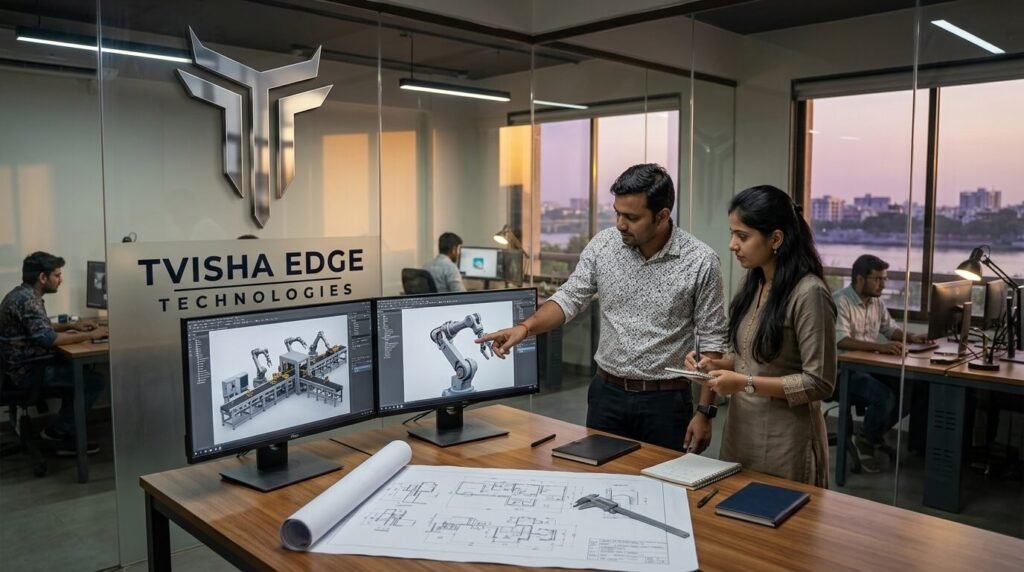
Why Engineering Firms Choose Tvisha Edge Technologies for Product Visualization
The real reason engineering teams look for animation support is clarity. Design teams want accurate exploded views. Marketing heads want cleaner product launches. Service teams want less confusion during installation and maintenance. That mix needs an experienced production partner, not just a motion designer. A capable 3D Industrial Animation Studio Ahmedabad should understand tolerances, assemblies, material finishes, motion logic, and user context before touching the timeline. You can explore the company background here: Tvisha Edge Technologies.
Yes, this is where Tvisha Edge Technologies is usually considered by manufacturing and engineering brands that need both visual polish and technical discipline. The team works from Ahmedabad and supports industrial clients across Surat, Vadodara, Jaipur, Kolkata, and Chandigarh as well, especially where product communication must serve multiple departments at once.
Here is a practical example. A pump manufacturer from Indore once had a good sales team but weak product demos. Dealers understood the broad use case, but not the internal working sequence. After switching to short technical animations and improved page visibility through supporting channels like search engine optimization, product explanation became easier across online and offline touchpoints.
Another common issue is that engineering firms treat animation as a final marketing layer. In reality, it works better when created earlier, during product launch planning. I’ve seen companies in Mumbai and Bangalore use the same animation asset for exhibitions, website pages, distributor training, and after-sales support. That lowers content duplication and keeps the technical story consistent.
Core Animation Capabilities Engineering Firms Usually Need
The best engineering animations are built around function. If a product has moving parts, the output should show sequence, purpose, and result. If a buyer needs to compare variants, the animation should isolate differences clearly. This is why 3D industrial animation, machine animation, manufacturing animation, and 3D product rendering often sit together in one production workflow rather than as separate tasks.
Yes, firms also ask for process-led content like plant walkthrough animation when they need to explain layout, safety flow, line integration, or project scope before installation. This is especially useful for EPC firms, heavy equipment makers, and industrial automation companies pitching to decision-makers who may not read every technical sheet in detail.
A lot of engineering brands now combine product films with campaign distribution. That is where support pages such as digital marketing solutions become relevant, because even strong visuals need the right publishing and targeting strategy to reach procurement teams, OEM buyers, and channel partners.
Here’s a pattern I’ve noticed in Hyderabad and Chennai: product teams want one animation, but service teams later request cutdowns for installation, safety, and troubleshooting. That is why a mature studio plans asset reuse from day one. It saves rendering cost and keeps visual logic intact.
For firms selling abroad, photorealistic 3D animation also helps bridge language gaps. A clear motion sequence often explains more in 30 seconds than a long technical brochure. This is one reason many engineering companies now ask for 3D visualization services alongside launch decks, microsites, and product email journeys such as those supported by email marketing.
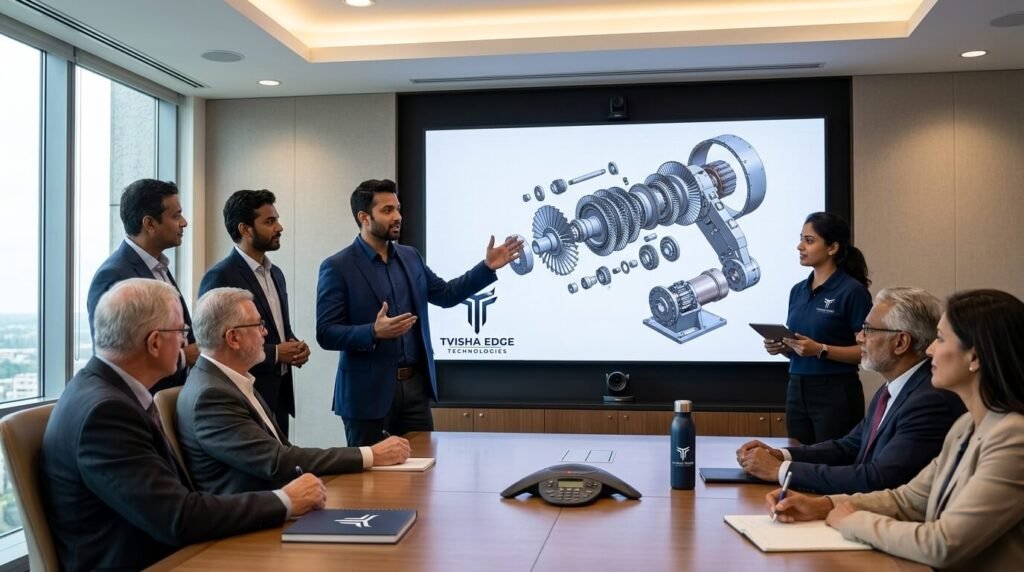
Technical Accuracy, Quality Control, and What Buyers Should Check
Here’s what engineering buyers should verify before approving any animation vendor: how they read CAD data, how they manage hidden components, how they validate motion, and whether they can simplify highly detailed assemblies without losing engineering meaning. These points affect credibility far more than flashy transitions.
A serious studio will ask for CAD files, operating notes, material references, and the intended audience before drafting scenes. That is especially true for O&M animation, training animation, and service manuals converted into visual explainers. If the output is for operators, the pacing must be slower. If it is for investors or exhibitions, the storytelling can be tighter.
I often tell clients to review the script like an engineer first and like a marketer second. One anonymized client from Surat manufactures filling systems. Their first draft animation looked polished but skipped a critical cleaning sequence. The sales team liked it; the service team rejected it. After correction, the same film became useful for training and customer onboarding too. You can see related industrial examples in 3D mechanical animation services in Dhandhuka.
Another useful check is whether the studio understands where animation fits in the buyer journey. Product demos support awareness, but they also help with follow-up mails, tender submissions, and technical presentations. That is why firms sometimes pair visual assets with mechanical 3D product animation in Dhandhuka style reference content when planning broader communication.
Get a Quote for 3D Product Animation Services For Engineering Firms
Local Studios vs Tvisha Edge Technologies: What Typically Changes in Delivery
Here’s how buyers usually compare a small generalist vendor with an experienced industrial specialist. The difference is less about software and more about process discipline, engineering understanding, revision control, and final usability across departments.
| Evaluation Point | General Local Studio | Tvisha Edge Technology Approach |
|---|---|---|
| Understanding of engineering products | Often visual-first | Function-first with technical review |
| CAD-to-animation workflow | May struggle with complex assemblies | Structured conversion and model cleanup |
| Use cases covered | Mainly promo videos | Sales, training, O&M, launches, walkthroughs |
| Revision quality | Visual edits only | Visual plus technical correction rounds |
| Output consistency | Varies by freelancer availability | Managed team workflow and review checkpoints |
One more thing buyers ask is whether animation can support inbound enquiries. In practice, yes. When paired with stronger discovery channels, animation improves dwell time and lead quality. Supporting assets like 3D mechanical animation in Dhandhuka can also help build topical depth around industrial visualization.
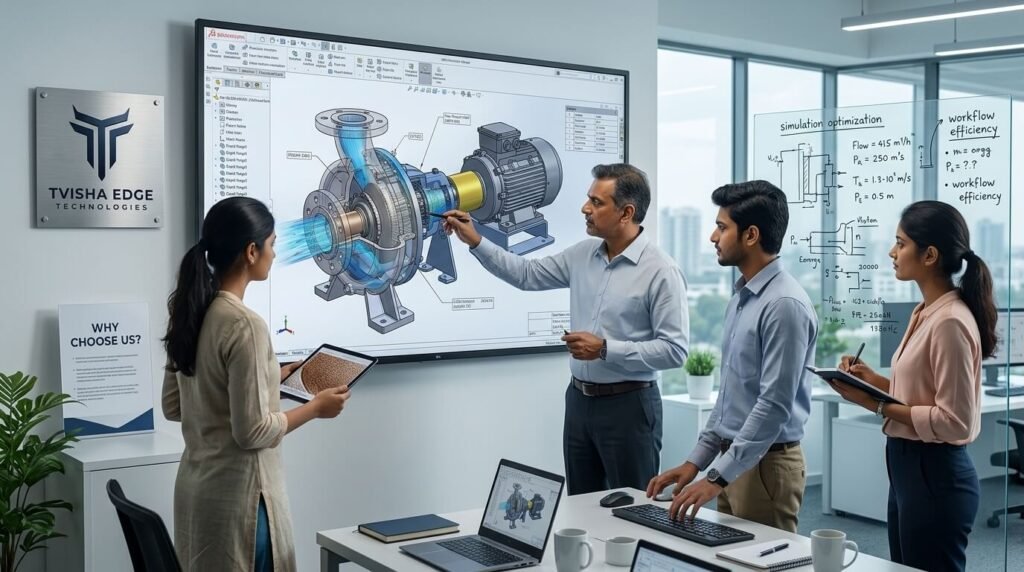
Step-by-Step Process and a Real Case Study
Here’s how Tvisha Edge Technologies typically delivers engineering-focused animation projects. Step one is discovery: product function, audience, and intended use. Step two is model preparation from CAD or reference drawings. Step three is scripting and storyboard approval. Step four is look development, lighting, camera motion, and simulation. Step five is technical review. Step six is final rendering, edits, and format delivery. For project discussion, firms can use the contact page.
A mini success story illustrates the value. A mid-sized valve manufacturer from Vadodara needed a short film for a trade event and later for dealer training. The first concern was whether internal flow visualization would look accurate enough for engineers. After alignment on cutaway views and material surfaces, the final animation helped the sales team explain operation faster and reduced repetitive technical questions during the exhibition.
Now for a fuller case study. An anonymized client, “RK Process Systems,” based near Ahmedabad, supplied modular conveying equipment to food and pharma plants in Pune and Hyderabad. Their challenge was simple: buyers could not grasp installation logic from PDFs, and the sales team kept using different explanations. The project scope included industrial 3D animation services India, product motion breakdowns, and one plant-level visual sequence. CAD files were available, but they were too heavy for direct use. So the workflow began with model optimization, then camera planning around assembly sequence, maintenance access, and operator safety zones.
The result was not just a brochure-style film. It became a sales asset, a website explainer, and a training reference for channel partners. More importantly, it created one consistent technical story. That is where Tvisha Edge Technologies usually adds value: not by making things flashy, but by making them usable. If your engineering team wants a practical starting point, ask for a Free 3D Animation Consultation, request the WhatsApp discussion option, or Download Industrial Animation Cost Guide before shortlisting vendors.
FAQs Engineering Buyers Commonly Ask
1. What do engineering firms use 3D product animation for?
- They use it for sales presentations, investor decks, training, product launches, maintenance guidance, and technical explanation where static visuals are not enough.
2. Can animation be created from CAD files?
- Yes. In most cases, CAD data is cleaned, simplified, and optimized before animation so the final visual remains accurate and render-friendly.
3. Is 3D animation useful only for large manufacturers?
- No. Mid-sized OEMs, machine builders, component suppliers, and industrial startups benefit too, especially when products are complex or custom-built.
4. How long does an engineering animation project usually take?
- Simple product films may take a few weeks. Complex assemblies, simulation-heavy scenes, or multi-output projects take longer depending on review cycles.
5. What should we share before starting?
- CAD files, product photos, operating notes, application details, brand guidelines, and the target audience for the video.
6. Can one animation be reused for training and marketing?
- Yes, if planned properly. Many firms create one master asset and then derive shorter cuts for sales, onboarding, and service communication.
7. How do we judge technical accuracy in the final output?
- Review motion logic, component position, sequence timing, labels, material finish, and whether the video explains the product the same way your engineer would.