When a machine is complex, a brochure often fails. Your buyer may not understand the working principle, your distributor may explain it differently, and your service team may train operators in five separate ways. That is where industrial animation helps. A clear visual story can show motion, assembly, workflow, maintenance, and safety in minutes.
In this article, you will learn how manufacturing companies use 3D industrial animation to shorten sales cycles, improve training, and explain technical systems without losing accuracy. We will cover where animation fits, what quality standards matter, how delivery works, and what to compare before choosing a production partner. If you are a plant owner, engineering head, or marketing manager in Ahmedabad, Mumbai, or Pune, this will help you make a practical decision.
Why Choose Tvisha Edge Technologies for Industrial Animation Services for Manufacturing Companies
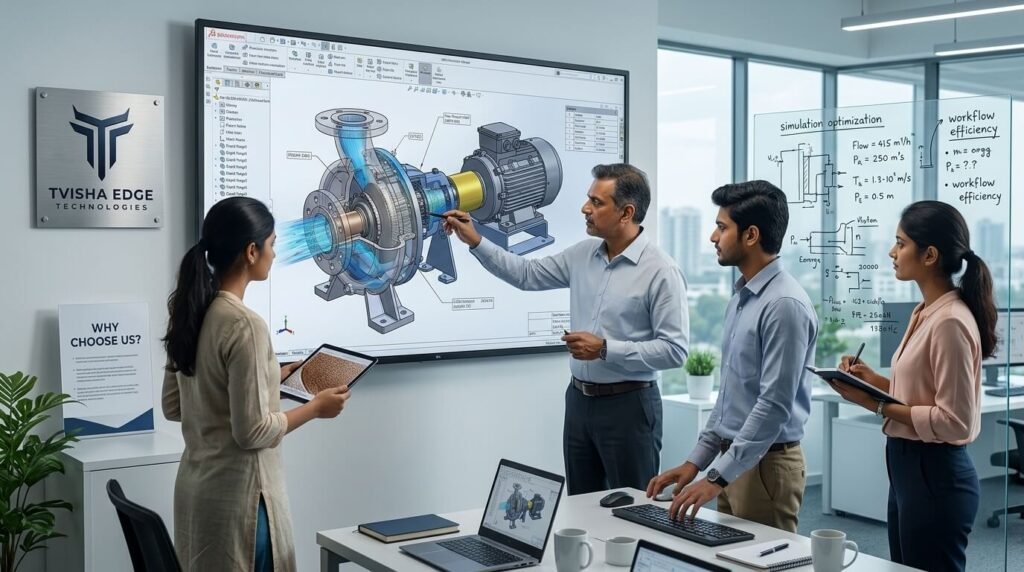
The best industrial animation work is not just about good visuals. It starts with understanding machines, tolerances, motion logic, maintenance steps, and the way Indian manufacturing teams actually review technical content. At Tvisha Edge Technologies, that technical-first approach matters because industrial buyers quickly notice when a motion sequence looks attractive but mechanically wrong.
Yes, manufacturers often ask whether animation is useful only for large enterprises. In practice, that is not true. A mid-sized pump maker in Surat may need a cut-section video for exports, while a fabrication unit in Vadodara may need a process explainer for dealer meetings. An automotive component supplier in Chennai may want a training module for line operators. The use case changes, but the business need is the same: make the product easy to understand.
Here’s how Tvisha Edge Technologies usually adds value for manufacturing teams. The company combines industrial subject understanding with visual production, so the final output is useful for sales, operations, and after-sales support. That matters when one animation has to serve multiple functions instead of becoming a one-time marketing asset. You can see the core service focus here: 3D industrial animation.
A small example from the field explains this well. A machinery supplier from Jaipur once relied on PDFs and static diagrams during buyer presentations. Prospects kept asking the same questions about internal movement and installation flow. After shifting to a short animated explainer, the technical meeting became smoother because most questions were answered visually before the discussion even started. That is the practical strength of 3D industrial animation studio Ahmedabad expertise when it is grounded in engineering reality.
Our Industrial Animation Capabilities for Manufacturing Companies
Yes, we provide much more than a rotating 3D model. Manufacturers usually need different outputs for different teams, and each one serves a separate business purpose. A sales team may need 3D product animation services for exhibitions, while the service department may need installation or O&M visuals. Marketing may require a product launch film, and HR or operations may need training modules.
Here are the most common deliverables manufacturing companies ask for:
- machine animation for internal working and assembly flow
- plant walkthrough animation for factory layout, process lines, and investor presentations
- O&M animation for operation and maintenance guidance
- training animation for operators, technicians, and safety teams
- 3D product rendering for catalogs, websites, dealer kits, and launch campaigns
- photorealistic 3D animation for product demonstrations and trade presentations
For many manufacturers, animation works best when it connects with digital sales channels. A company may use a product film on the website, short clips for LinkedIn, and rendered visuals for brochures or landing pages. That is why some clients combine animation with web development so the assets are built for actual conversion, not just presentation.
The same goes for lead generation. A technical video can bring attention, but it performs better when paired with the right campaign structure, landing page message, and targeting. That is one reason some manufacturing brands also align animation projects with digital marketing efforts to support product launches in cities like Delhi, Hyderabad, and Bangalore.
If you are wondering whether animation helps only in external marketing, the answer is no. It often reduces repeated explanation inside the business. One client in Indore used a single manufacturing animation asset in distributor onboarding, customer demos, and internal training. Mini-conclusion: the more technically reusable the asset, the higher the return from one project.
Navigating Quality Standards and Technical Accuracy
The best question to ask an animation partner is simple: how do you ensure the motion is technically correct? In industrial work, visual polish alone is not enough. Engineers look at shaft movement, valve position, material flow direction, assembly order, safety clearances, and maintenance access. If those details are wrong, trust drops immediately.
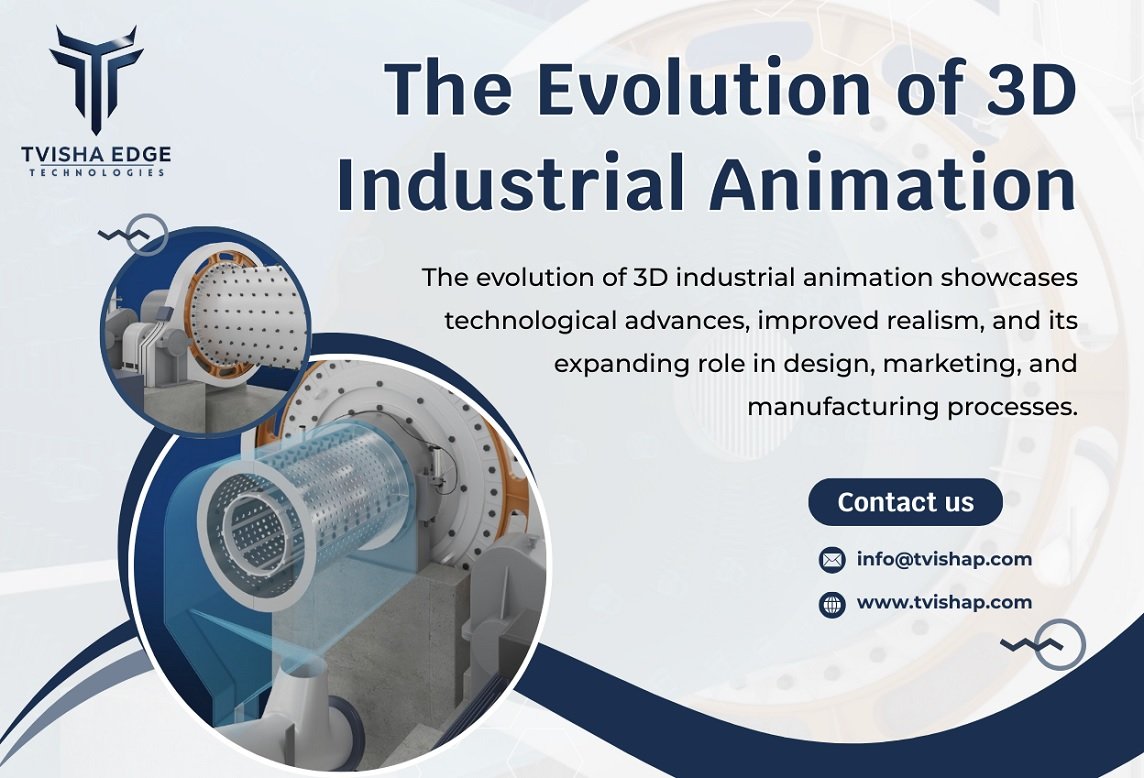
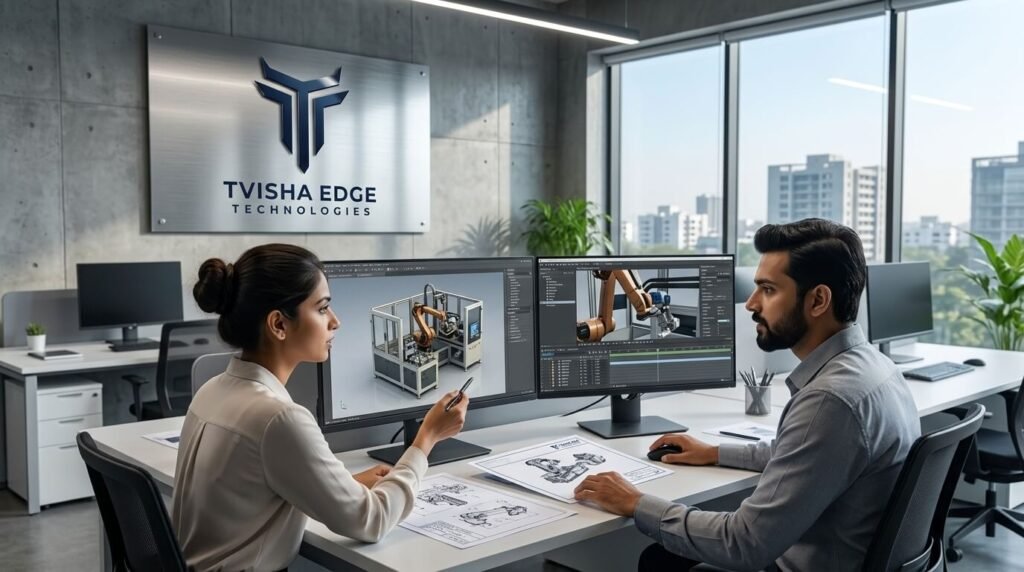
Here’s how Tvisha Edge Technologies typically approaches quality control. First, the team studies CAD files, reference drawings, manuals, and recorded machine behavior. Then they validate sequence logic with the client before full production starts. This reduces the common problem of reaching final render stage and discovering that the process flow or component timing is inaccurate. For industry perspective, this evolution is discussed well in the evolution of 3D industrial animation.
Manufacturers also ask what makes a good industrial animation different from a generic 3D video. The answer is technical interpretation. A consumer-style animation may focus on mood and visual energy. Industrial work must explain function. For example, if a packaging machine in Kolkata has a jam-prone transfer point, the animation should clarify the mechanism and not hide it behind dramatic camera movement.
Another common question is whether photorealism always matters. Not always. For training and maintenance, clarity often matters more than glossy surfaces. But for investor decks, exports, product launches, and trade exhibitions, realism helps buyers trust what they are seeing. If you want a broad sector view, this article on top industries benefiting from 3D industrial animation gives a useful reference point.
Caution matters here. If your supplier rushes directly into rendering without a validated script, storyboard, and technical review, delays are likely. Mini-conclusion: in industrial visualization, accuracy is not a finishing touch; it is the base layer.
Local Studios vs Tvisha Edge Technologies: What to Compare Before You Decide
The best comparison is not local versus national in a simple sense. It is capability versus business need. Some local teams can handle basic product views, but manufacturing companies often need process understanding, revision discipline, and assets that work across sales, service, and training.
| Comparison Factor | Typical General Studio | Tvisha Edge Technologies Approach |
|---|---|---|
| Industrial understanding | May rely only on visual references | Studies CAD, process flow, manuals, and functional logic |
| Output use | Often limited to presentation videos | Built for sales, training, support, and launch campaigns |
| Revision process | Changes may happen late | Technical checks happen before final production |
| Visual quality | Varies by project type | Focused on industrial-grade clarity and realistic finish |
| Business fit | May not support wider digital rollout | Can align animation with web and campaign needs |
A useful buyer checklist is this: ask for process samples, ask how they handle technical approvals, ask what files they need from your engineering team, and ask how many versions you will receive for different business uses. If you want to review what buyers often consider before selecting an industrial animation partner, this page on the best 3D industrial animation firm is worth reading.
Get a Quote for Industrial Animation Services For Manufacturing Companies
Step-by-Step Process: How We Deliver Industrial Animation Projects
Here’s how Tvisha Edge Technologies generally delivers a manufacturing animation project. The process is structured so engineers, managers, and marketing teams can all review at the right stage instead of conflicting at the end.
1. Discovery and technical intake
- The team collects CAD files, product photos, SOPs, service notes, and target use cases. A machine demo for a buyer in Chandigarh will need a different script than a safety module for a plant in Ahmedabad.
2. Script and visual planning
- The next step is to define what the animation must explain. Is it a process story, a product mechanism, an installation sequence, or an operator training film? This is also where voiceover style, language, and screen text are finalized.
3. 3D modelling, texturing, and scene build
- If CAD is available, it is optimized for animation. If not, the model is rebuilt from references. Surfaces, materials, lighting, and camera angles are then prepared depending on whether the output needs realism, clarity, or both.
4. Technical validation and animation
- Motion starts only after sequence approval. That matters because even a small mistake in belt direction, component timing, or material flow can trigger multiple revision rounds later.
5. Render, review, and deployment
- Final files are exported in the formats needed for presentations, websites, exhibitions, WhatsApp sharing, and internal use. If you want to discuss your own requirement, you can request a Free 3D Animation Consultation, ask for WhatsApp support, or Download Industrial Animation Cost Guide during the enquiry process.
Mini client success story: a process equipment brand in Pune used one short animation across dealer meetings and an expo kiosk. Their sales team later said prospects understood the equipment faster, so technical meetings became more focused and shorter. That is often the first measurable win.
Real Client Case Study
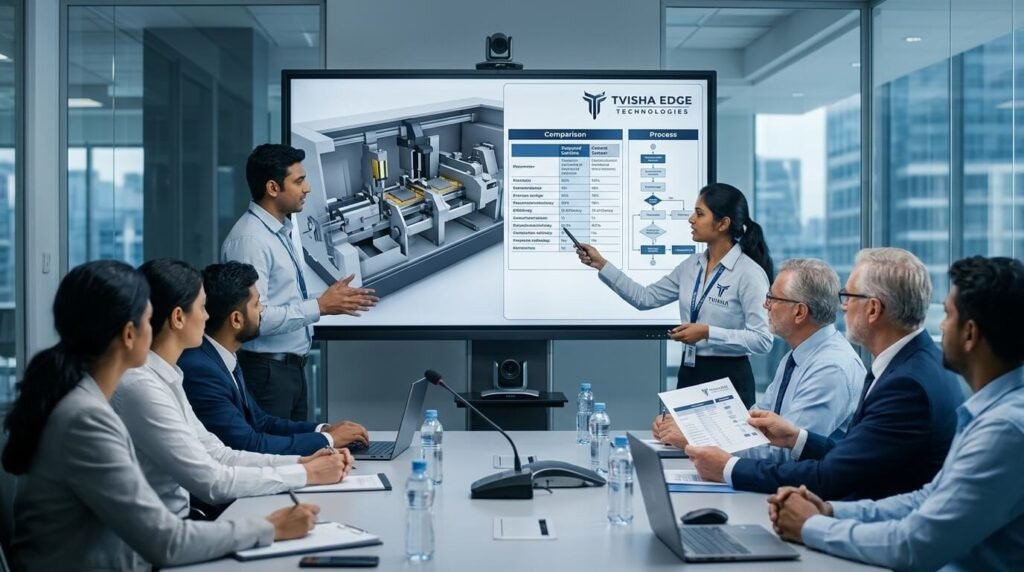
Here’s how Tvisha Edge Technologies handled a realistic manufacturing case. An anonymized client, “M-Tech Flow Systems,” based near Mumbai, made industrial pumping systems for chemical and water treatment applications. Their challenge was familiar: the product looked straightforward from outside, but the internal flow path, seal arrangement, and maintenance procedure were hard to explain to buyers and technicians.
The project began with CAD review, service manual mapping, and a discussion with the client’s engineering lead. Instead of making one long film, the content was split into three assets: a sales-focused explainer, a maintenance sequence, and short clips for dealer communication. This was important because the same audience does not need the same level of detail.
The final animation package helped the client in three ways. First, their export sales team used the visual to explain product working without carrying a physical unit to every meeting. Second, their service team used the maintenance section for technician training. Third, the company added rendered stills and clips to digital presentations, creating a more consistent message across channels. For manufacturers exploring industrial 3D animation services India, this kind of multi-use planning is usually what creates long-term value.
FAQs
1. What are industrial animation services for manufacturing companies?
- They are 3D visual content services used to explain machines, plant systems, products, processes, maintenance, and training in a clear visual format.
2. How is 3D industrial animation useful in sales?
- It helps buyers understand working principles faster, especially for hidden internal mechanisms and complex process flow.
3. Can animation be used for factory training?
- Yes. It is commonly used for operator onboarding, maintenance guidance, safety training, and standard operating procedure support.
4. Do manufacturers need CAD files for animation?
- CAD files help a lot, but they are not always mandatory. A skilled team can also work from drawings, photos, manuals, and video references.
5. How long does an industrial animation project take?
- Simple projects may take a couple of weeks, while detailed multi-scene technical animations can take longer depending on reviews and source material.
6. Is photorealistic animation necessary for every project?
- No. Training projects often need clarity first. Product launches, exhibitions, and investor presentations usually benefit more from realistic visuals.
7. Which industries commonly use this service in India?
- Engineering, process equipment, pumps, packaging, automotive, heavy machinery, pharmaceuticals, and plant systems all use industrial animation.