
Complex industrial processes are often hard to explain with drawings, manuals, or static presentations alone. In real project meetings, especially with plant teams, OEM partners, and marketing heads, the confusion usually starts when people must imagine movement, flow, sequence, and machine interaction from flat documents. That is where process visualization animation becomes useful. It turns technical steps into a visual story that people can understand faster and remember longer.
In this article, you will learn how process visualization animation helps manufacturers, engineering companies, and industrial brands explain systems with more clarity. You will also see how Tvisha Edge Technologies approaches technical accuracy, what quality standards matter, how to compare studio options, and what a practical project workflow looks like.
Why Choose Tvisha for Process Visualization Animation Services
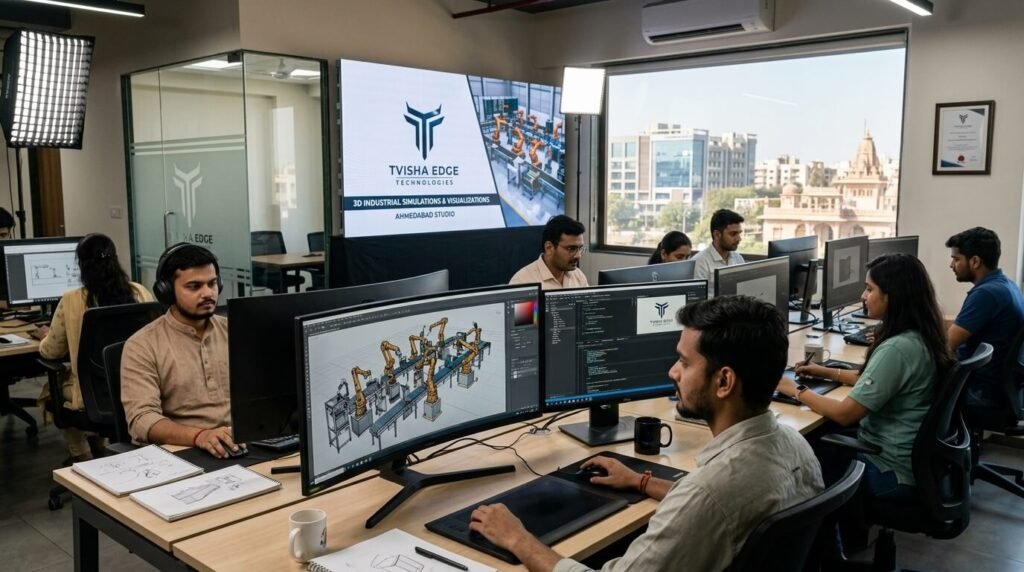
The best process visualization projects come from teams that understand both motion design and industrial logic. Tvisha Edge Technologies works as a technical visualization partner for companies that need manufacturing flow, equipment movement, plant operations, and training communication presented in a clear visual format. As a 3D industrial animation studio Ahmedabad, the team handles industrial subjects with the discipline they require.
Yes, industrial clients usually need more than attractive visuals. They need sequence accuracy, correct proportions, realistic equipment behavior, and outputs that can be used in sales decks, exhibitions, operator training, internal approvals, and investor presentations. That is why process-focused work often overlaps with 3D visualization services, machine animation, and manufacturing animation.
Here’s the key difference: a general animation team may create motion, but an experienced industrial team creates understanding. Tvisha Edge Technologies brings an experienced team of 3D animators, industrial visualization experts, and creative professionals delivering high-precision 3D animations for manufacturing, engineering, and industrial clients across India and international markets. In practical terms, that means fewer revision loops and better alignment with plant, design, and business stakeholders.
A small example from Ahmedabad explains this well. One engineering supplier had a good product but struggled to explain process flow during distributor meetings in Mumbai and Pune. After replacing static slides with a short process animation, the sales team reported that discussions became more focused. Prospects asked better questions because they could finally see the sequence instead of guessing it.
Our Process Visualization Animation Capabilities
Yes, we provide process-focused visual content across product, plant, and operational scenarios. This includes plant walkthrough animation, process line simulation, assembly flow visuals, internal material movement, utility system explanation, and maintenance communication. For companies evaluating related outreach support, their broader digital ecosystem also connects with digital marketing solutions when visual assets need distribution support.
The best industrial animations do not start with rendering. They start with engineering inputs. Teams usually share GA drawings, CAD files, P&IDs, machine references, SOPs, or even mobile-shot factory videos. From there, the animation team develops scene logic for training animation, service explanation, operator safety understanding, and customer-facing technical presentations.
Here’s how these capabilities are commonly used across Indian markets:
- In Delhi, EPC and infrastructure firms use process visuals for tender and proposal presentations.
- In Bangalore, tech-enabled manufacturing teams use animations for investor decks and product demonstrations.
- In Hyderabad and Chennai, pharmaceutical and process industry businesses use them for training and compliance communication.
- In Surat, textile and engineering units often need machine sequence visualization for client sales meetings.
- In Vadodara and Indore, industrial equipment suppliers use animated walkthroughs to explain systems before installation.
Watch for this distinction: 3D Product Animation Services focus on a product’s features and use-case, while process visualization animation explains movement, workflow, interaction, and outcome over time. Both can overlap, but the objective is different. A useful supporting reference is this article on the evolution of 3D industrial animation, which shows how industrial communication has shifted from static explanation to immersive visual storytelling.
Navigating Quality Standards & Technical Accuracy
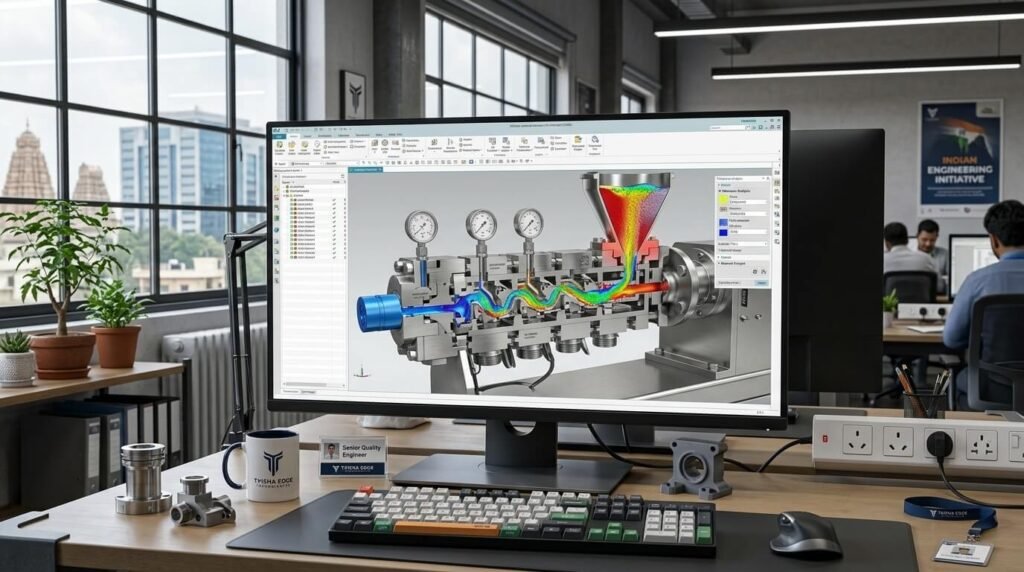
The best way to judge industrial animation quality is simple: ask whether the animation can survive review by an engineer, plant operator, and sales manager at the same time. If one group says it looks nice but another says the sequence is wrong, the asset will not perform well. That is why technical validation matters as much as visual polish.
Yes, quality standards in this field usually include correct dimensions, realistic motion timing, proper camera logic, readable labeling, process-step sequencing, and industry-appropriate textures. In sectors such as chemicals, packaging, heavy engineering, food processing, and manufacturing automation, even one incorrect valve direction or conveyor flow can weaken trust. This is especially true when animations are used as O&M animation or service-support assets.
Here’s how Tvisha Edge Technologies keeps quality practical rather than decorative:
- reviews source files before scene planning
- confirms process sequence with the client team
- creates draft animatics before final rendering
- checks lighting and materials for realism, not exaggeration
- aligns animation output with use-case: sales, training, installation, or internal communication
A mini success story from Jaipur is worth noting. An industrial pump manufacturer needed a short visual to explain fluid movement and maintenance access. Their earlier vendor made a visually decent clip, but the sectional cut view was technically misleading. After rebuilding the flow logic and access sequence, the revised animation helped the company reduce repeated technical clarification during customer presentations. For related visualization work, this page on product modeling animation services gives a helpful adjacent example.
Get a Quote for Process Visualization Animation Services
Local Studios vs Tvisha Edge Technologies
The best comparison is not local versus non-local. It is generic motion capability versus industrial understanding. Many smaller studios can create attractive movement, but industrial clients usually need structured pre-production, engineering interpretation, and review discipline. That difference affects both timelines and usability.
| Evaluation Factor | Typical Local Studio | Tvisha Edge Technologies |
|---|---|---|
| Industrial process understanding | Often limited to visual interpretation | Built around manufacturing and engineering communication |
| Input handling | May rely heavily on basic briefs | Works with CAD, process notes, SOPs, and technical references |
| Use-case alignment | Generic output for display | Outputs tailored for sales, training, O&M, and demos |
| Revision quality | Mostly visual edits | Visual and technical review cycles |
| Related business support | Usually limited | Connected support in search engine optimization and branded communication workflows |
Here’s the key takeaway: if your team only needs decorative animation, many options will work. If you need an industrial animation company India manufacturers can rely on for technical explanation, process validation matters more than low headline pricing.
Step-by-Step Process – How We Deliver Process Visualization Animation Services
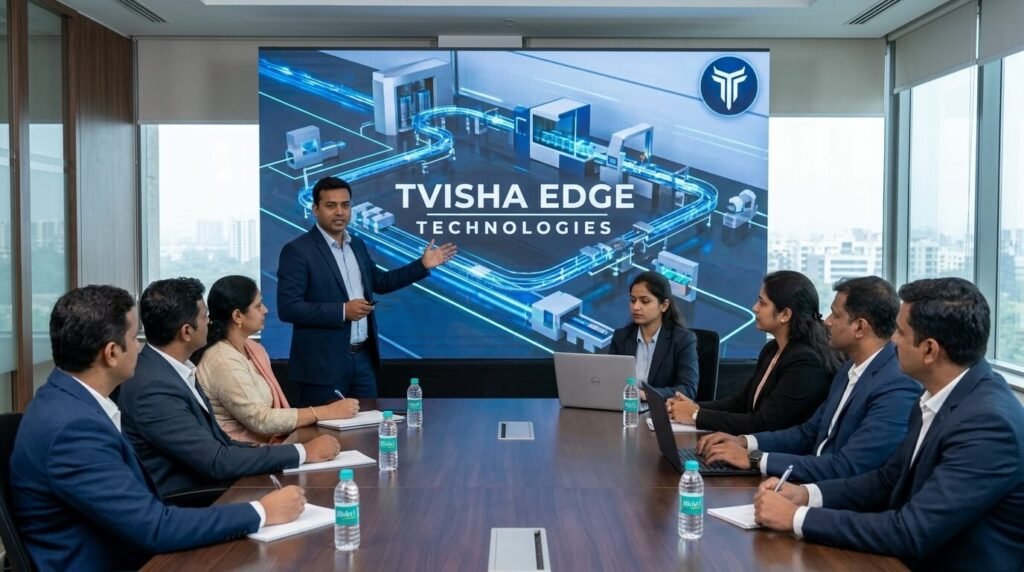
Here’s how Tvisha Edge Technologies usually delivers a structured process visualization project. First, the team collects reference inputs: CAD, sketches, images, line diagrams, factory videos, and intended usage. Second, they define the communication goal. Is the animation meant for training, sales, commissioning, website display, or investor communication? That decision changes pacing, camera style, labels, and level of detail. Businesses promoting such assets through campaigns may also align with email marketing for customer education.
The next step is scene planning. This is where process flow gets converted into visual beats. A good team decides what should be shown externally, what should be cut away, where text support is needed, and how much technical detail the end viewer can absorb. This is also the stage where 3D product rendering and photorealistic 3D animation choices are balanced against timeline and budget.
Then comes modeling, texturing, animation, and review. For many industrial subjects, animatics save a lot of time because the client can approve sequence logic before the final render begins. If the subject includes moving assemblies or line equipment, this reference on 3D machine animation services is closely related.
The final stage includes voice or text overlays, output formatting, and use-case adaptation. Some clients need widescreen versions for exhibitions. Others need shorter cuts for sales teams or WhatsApp sharing. A useful next step for many businesses is a Free 3D Animation Consultation or the option to Download Industrial Animation Cost Guide before finalizing scope. Mini takeaway: the smoother the input and review process, the stronger the final animation.
Real Client Case Study
Here’s a realistic case study based on a common project pattern. A mid-sized process equipment manufacturer from Chandigarh—let us call them Client R—wanted to explain a multi-stage filtration and transfer system to buyers in Kolkata, Chennai, and Ahmedabad. Their sales team used PDFs and static cut-sections, but prospects struggled to understand flow sequence, maintenance access, and machine interaction.
The project started with CAD data, process notes, and a recorded call with the client’s service engineer. Instead of making a flashy clip, the animation was structured around three business questions: How does the system work? Where does material move? What happens during service access? The resulting asset combined external views, transparent cutaways, motion callouts, and selective labels. It functioned as both Industrial 3D Animation Services India buyers expect and a practical sales tool.
Within a few weeks of deployment, the client reported that first-level product explanation time during meetings dropped noticeably. Their dealer team also began using the animation before plant visits, which improved the quality of incoming conversations. One lesson stood out: a technically grounded process animation reduces confusion before the commercial discussion even starts. That is often where industrial projects gain momentum.
Frequently Asked Questions
1. What are process visualization animation services?
- They are animated visual assets that explain how an industrial process, machine sequence, or plant workflow operates step by step.
2. Who typically needs this type of animation?
- Manufacturers, OEMs, EPC firms, automation companies, process industries, and sales or training teams that must explain technical systems clearly.
3. Is process animation useful only for marketing?
- No. It is also useful for training, internal communication, proposals, exhibitions, maintenance explanation, and pre-sales technical discussions.
4. What inputs are required to start?
- Most projects begin with CAD files, drawings, product photos, process notes, SOPs, or even factory videos if design files are limited.
5. How accurate can industrial animations be?
- Very accurate, if the team validates sequence, dimensions, motion logic, and process steps with engineers before final rendering.
6. How long does a typical project take?
- Simple projects may take a couple of weeks, while larger plant or multi-sequence animations may take several weeks depending on revisions and source data quality.
7. Can the same animation be reused in multiple ways?
- Yes. One master animation can often be adapted for websites, exhibitions, sales presentations, email outreach, and WhatsApp sharing.
